Veiled Realms - The Sheegothai path - Martno
- Author
- Martino Bettoni
- Published
- Updated
- Read Time
- ~ 3 min
- Categories
- Environmental Design, Game Props
1° update03.07.25
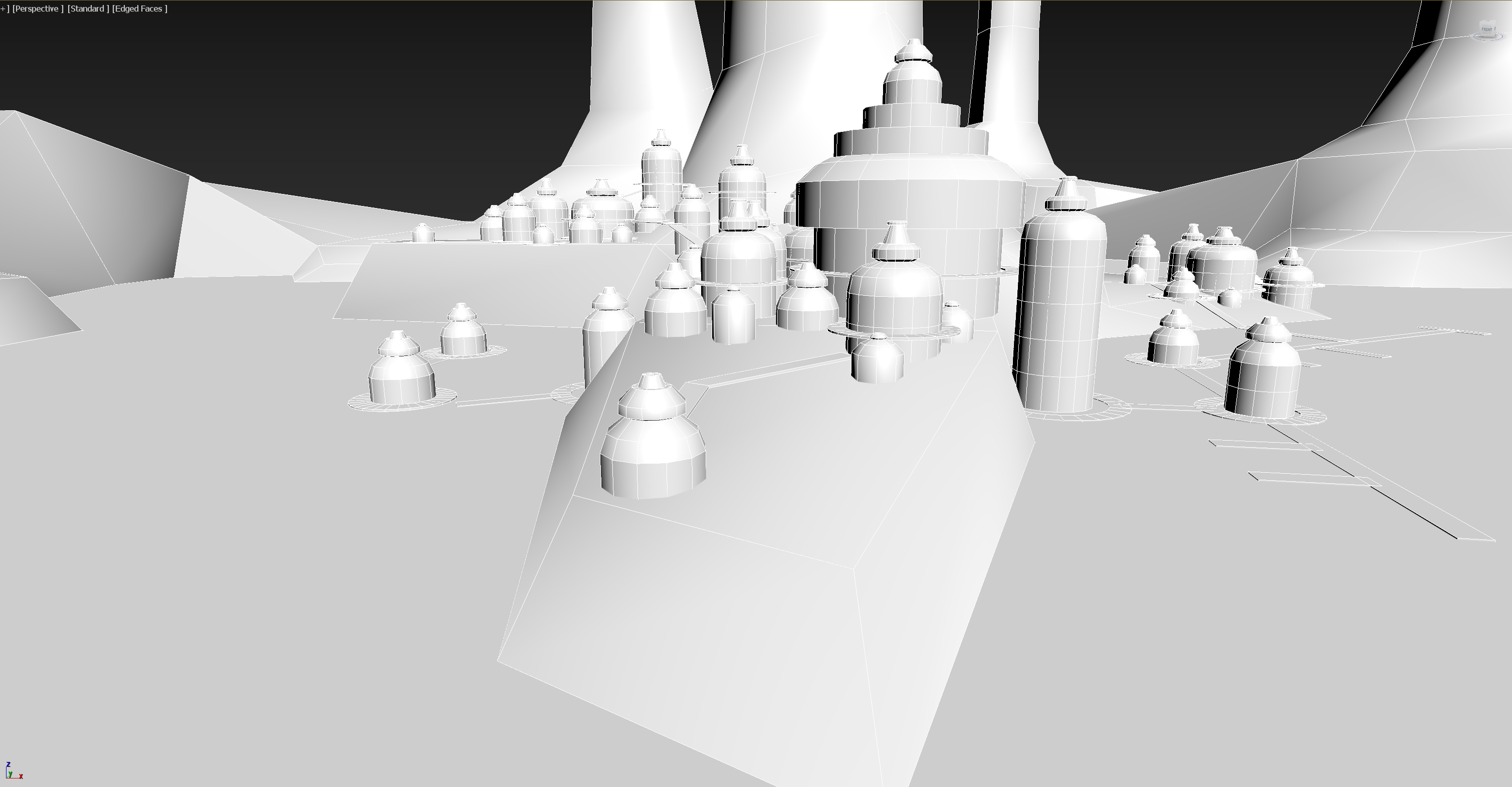
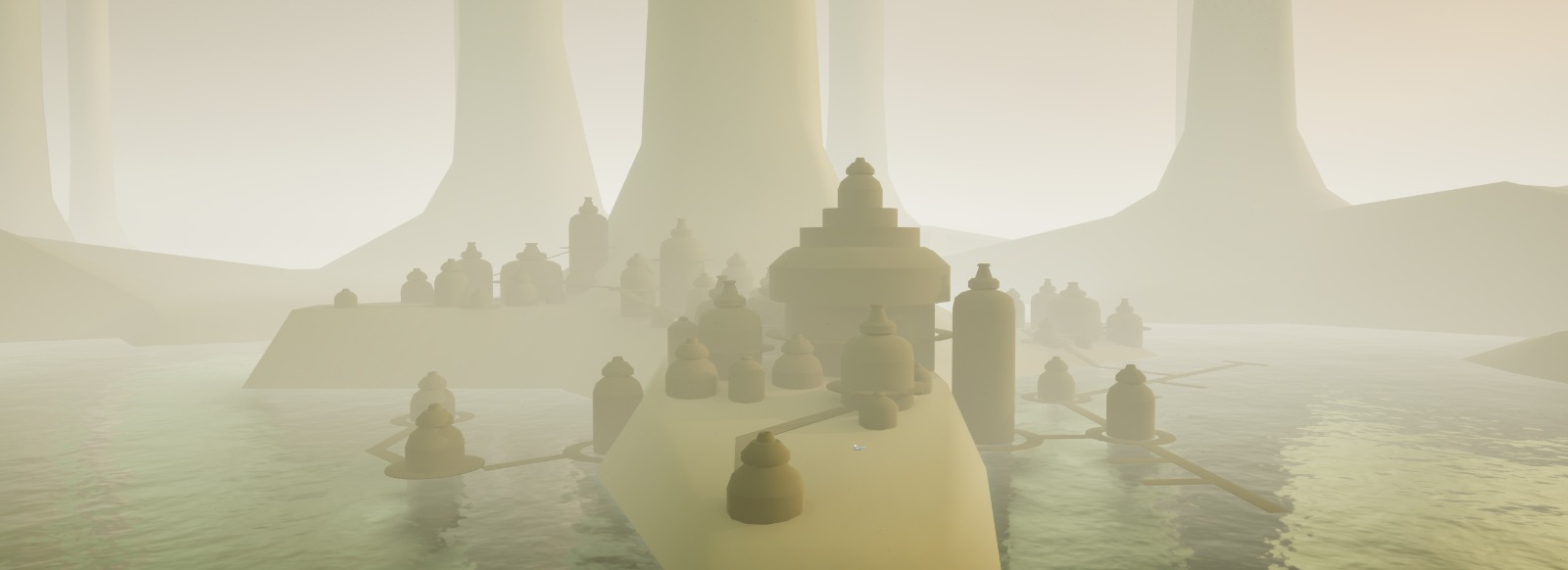
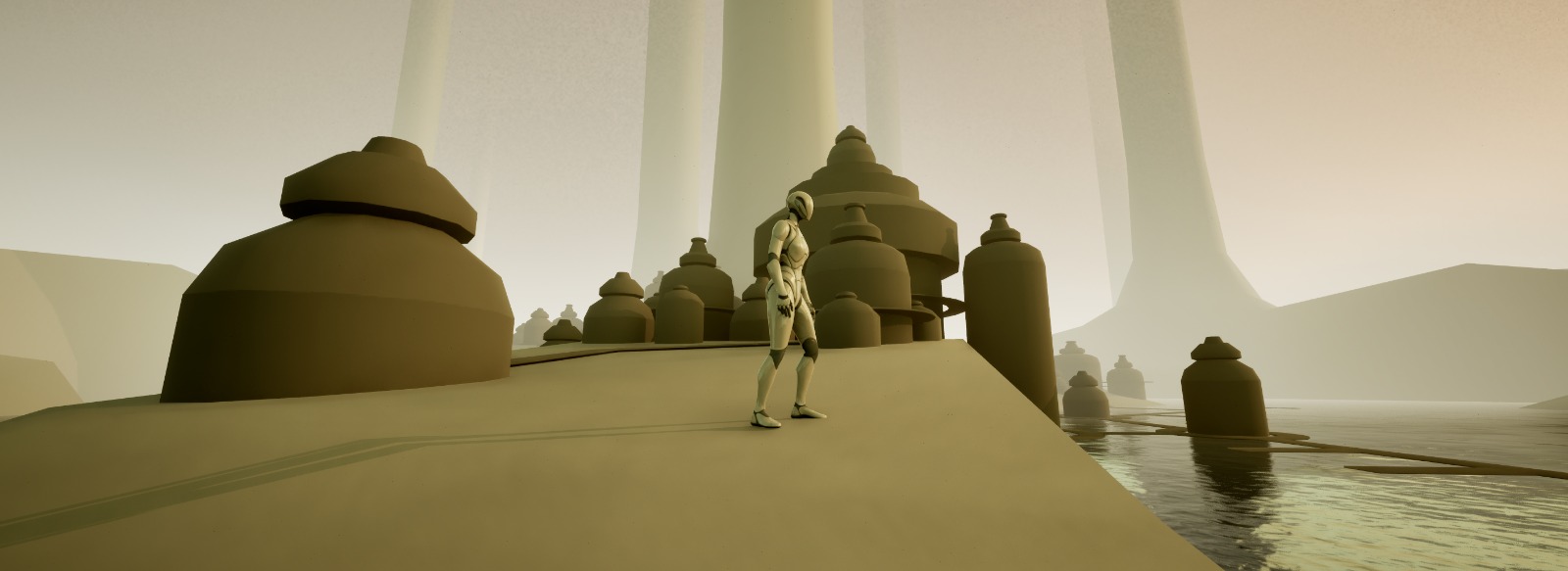
I started working with polygons by blocking out the main volumes and the terrain. This study phase is essential for me because it allows me to get an overall view of the scene and to organize the next steps for developing the details. Once I had the basic layout sketched in 3ds Max, I exported everything in Unreal to begin crafting the right atmosphere — again, starting with generic lighting — so I could better understand the work needed and where to focus on adding detail. I usually work with a third-person preset in Unreal, and once I’ve set up the collisions, I immediately test the game to see how it feels from the player’s perspective.
-------------------------------------------------------------------------------------------------------------------------------------------------------------------------------------
Exploring The Sheegothai: a visual journey through decay and mystery
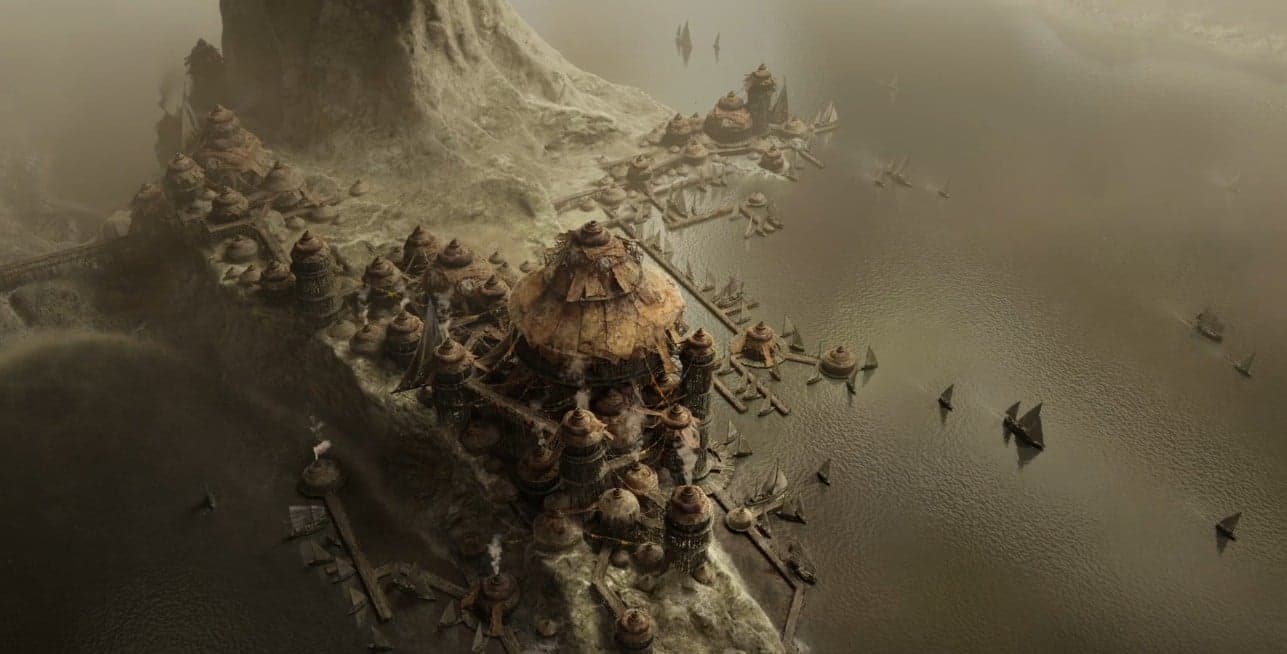
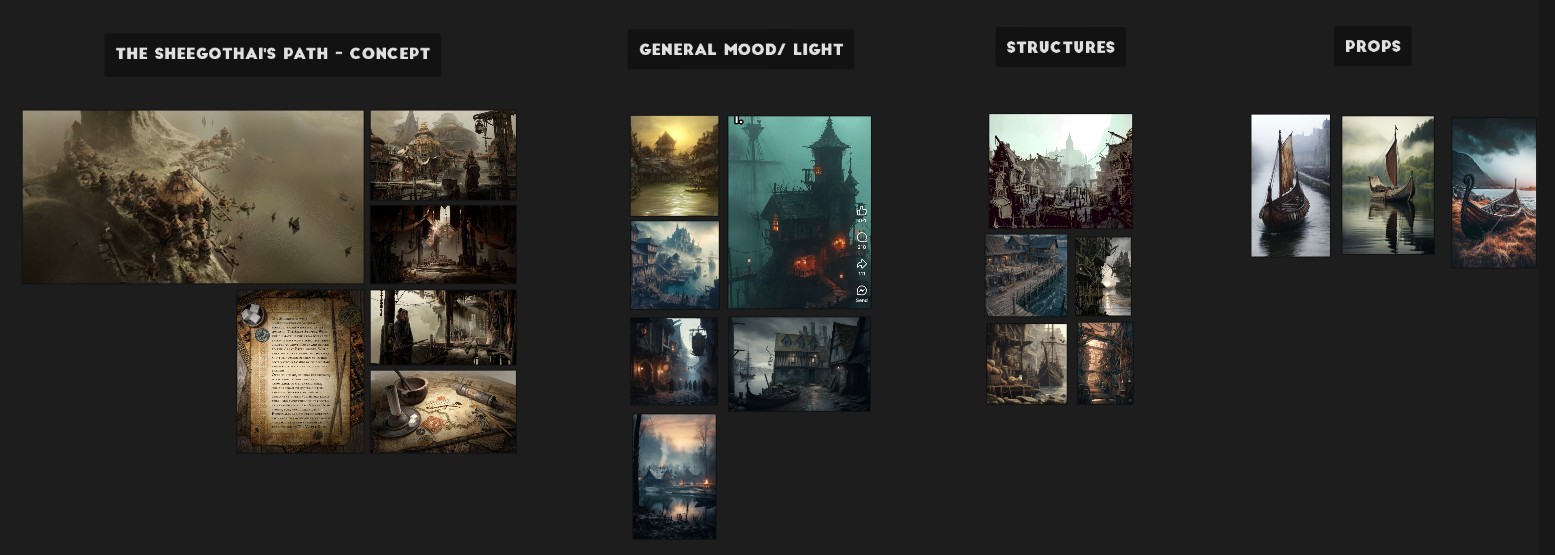
When I first came across Max Bedulenko’s concept The Sheegothai, I immediately felt I was looking at something far more than a simple stylistic exercise. There’s a dense, layered atmosphere that radiates from every part of the image: the monolithic yet jagged architecture, the dusty, desaturated palette, the intricate details that seem to whisper stories of forgotten civilizations and dormant powers. Bedulenko’s world isn’t just meant to be observed — it invites you to explore it, question it, inhabit it.
Inspired by this visual universe, I decided to develop a 3D environment for a hypothetical video game, aiming to translate the essence of this decaying scenario into a fully navigable space. My goal isn’t to replicate the original concept, but to reinterpret its visual language and build a new place that echoes its haunting beauty and narrative weight.
One of the aspects I’m particularly interested in exploring is the terrain morphology. In Bedulenko’s piece, the city seems nestled in the heart of a river landscape — a feature that immediately caught my attention. The river is not merely a backdrop: it acts as a shaping force, carving out the land, isolating the architecture, enhancing its mystique. I want the environment I’m creating to reflect this deep relationship between terrain and narrative — to become a place where water and soil actively shape the identity of the space.
To bring this vision to life, I’ll be working with a pipeline that includes several key tools: ZBrush for terrain sculpting and organic detailing; 3ds Max for architectural modeling; Substance Painter for material texturing; and Photoshop for 2D textures and additional visual polish. Everything will be assembled and refined in Unreal Engine 5, leveraging the power of Lumen and Nanite to achieve a visually immersive and atmospheric result.
My intention is to build a space that evokes solemnity and abandonment — a place the player can walk through, as if wandering the silent remains of an alien and ancient civilization. Light, materials, and architecture will be central, but so will the landscape itself — a geological body telling its story through erosion, fragmentation, and sedimented history.
In my next update, I’ll share the first steps of the design process: from spatial layout sketches to terrain tests and early moodboards. This is the beginning of a creative journey aimed at shaping a world that, while entirely new, speaks the same silent and powerful language The Sheegothai so masterfully evokes.
#leartesstudios
#learteschallenge
https://cosmos.leartesstudios.com/challenges/veiled-realms-art-challenge