Digital worlds indistinguishable from dreams...
Introduction:
With over 10 years of experience in concept art for the video game industry, I've always been fascinated by worlds where history and technology intertwine. My work has often focused on architectural and mechanical subjects, exploring how structures from the past can interact with contemporary or imaginary elements. This is why the Veiled Realms Art Challenge immediately caught my attention: the idea of delving into ancient worlds, veiled by time and reimagined by fiction, resonates deeply with my artistic practice.
But while dystopia has often dominated science fiction narratives, it is towards retro-futurism that I wish to orient my participation. This movement, where the past and the future collide, offers a perfect canvas for combining complex mechanisms with architectures from bygone eras, creating universes that are both familiar and profoundly strange.
Why this challenge?
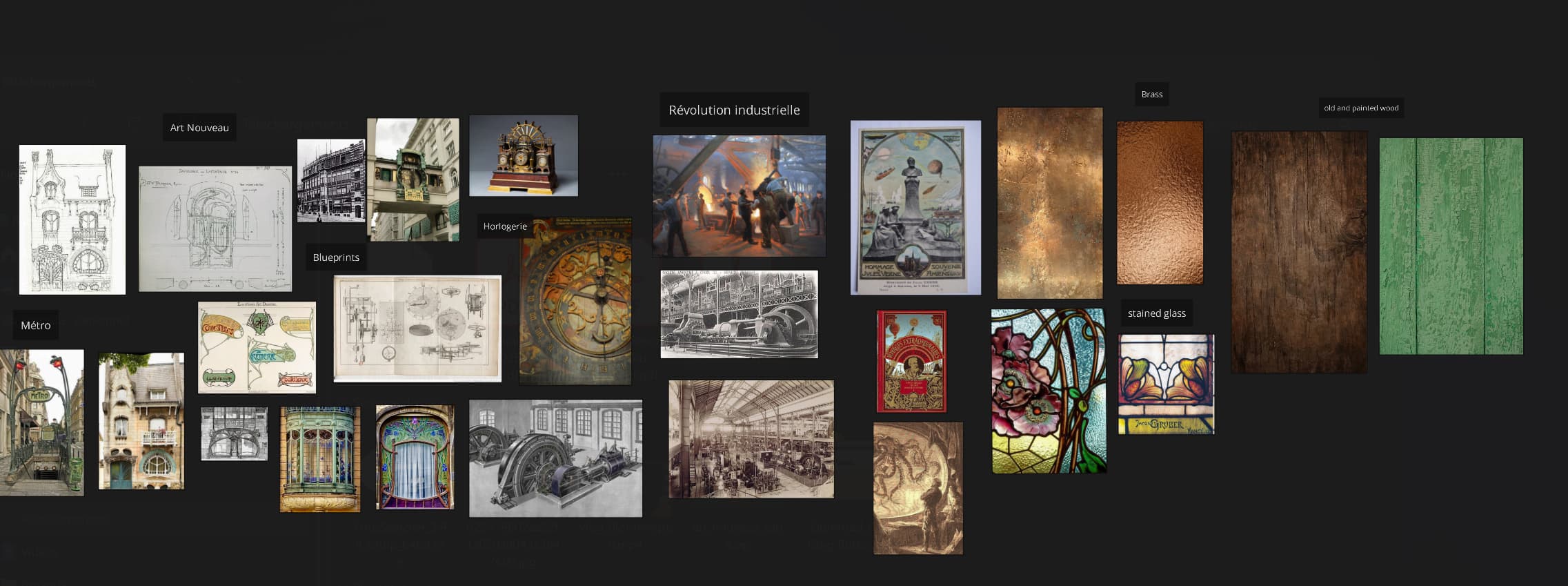
"The Veiled Realms" theme evokes lost civilizations, buried technologies, and forgotten stories. For me, it's the perfect opportunity to further my exploration of retro-futuristic industrial design: machines conjugated with the Industrial Revolution, architectural structures inspired by Art Nouveau, sometimes taking the generic term "steampunk," but can be reinterpreted with a touch of mystery and poetry. These imaginary worlds, where time seems suspended, allow me to play with the contrasts between the precision, the elegance of the organic curves of Art Nouveau and the wear of oxidized materials, between the majesty of 19th-century city architecture and the practical lives of its inhabitants.
My goal? To create visuals that tell a story, where each architectural or mechanical detail suggests a rich past and reinvented technology. Whether through blueprints of machines that could have existed, or architectural environments halfway between reality and fantasy, I want each piece evokes a coherent and immersive universe.
To begin :
For this challenge, I plan to rely on:
- Visual research combining historical references (Art Nouveau architecture, 19th-century industrial machinery) and fantasy influences (fictional technologies with real-life roots).
- Exploratory sketches to define the silhouettes and functions of key elements (buildings, mechanisms, objects).
- A palette of colors and textures that plays on contrasts: oxidized metals, weathered wood, tinted glass, and subdued lighting to enhance the atmosphere of mystery.
- Digital tools (Photoshop, Procreate, but why not Blender, Substance Painter) to bring these concepts to life, while maintaining a handcrafted touch in the finishing touches.
I don't yet know exactly where this exploration will take me, or if the timeframe will be adequate, but one thing is certain: it will be a journey between nostalgia and innovation, where every detail will tell part of the story of these veiled kingdoms.
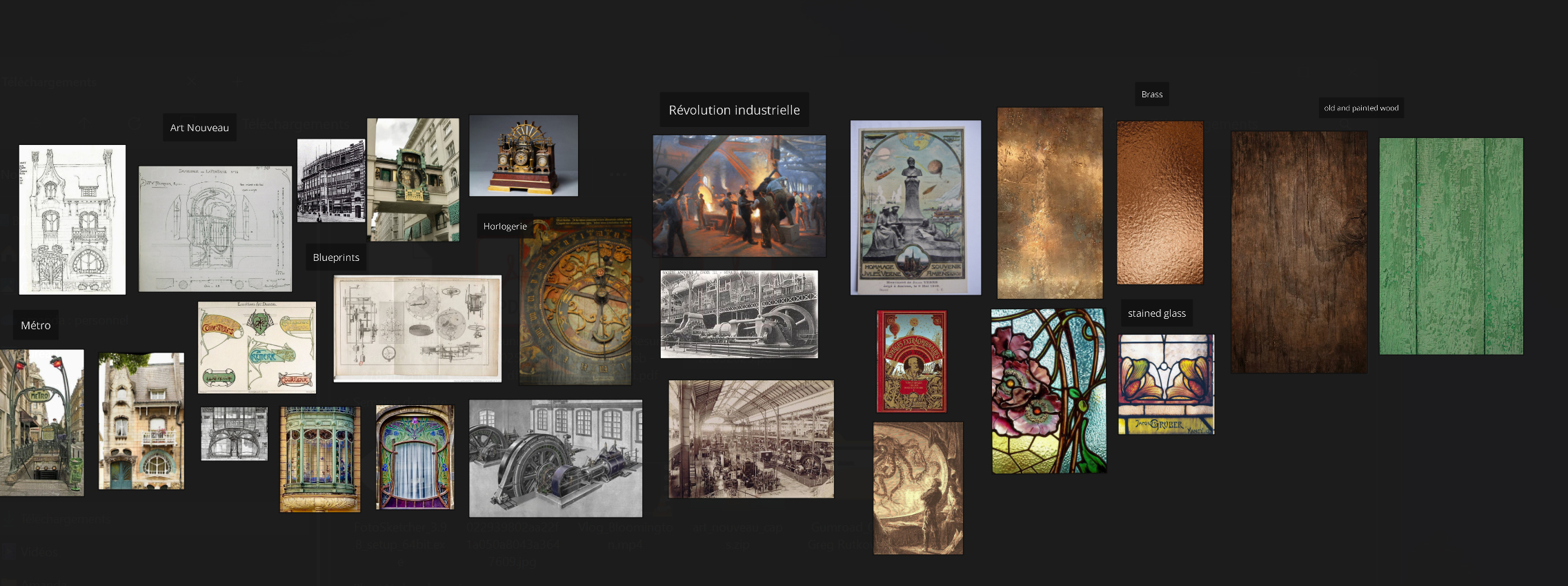
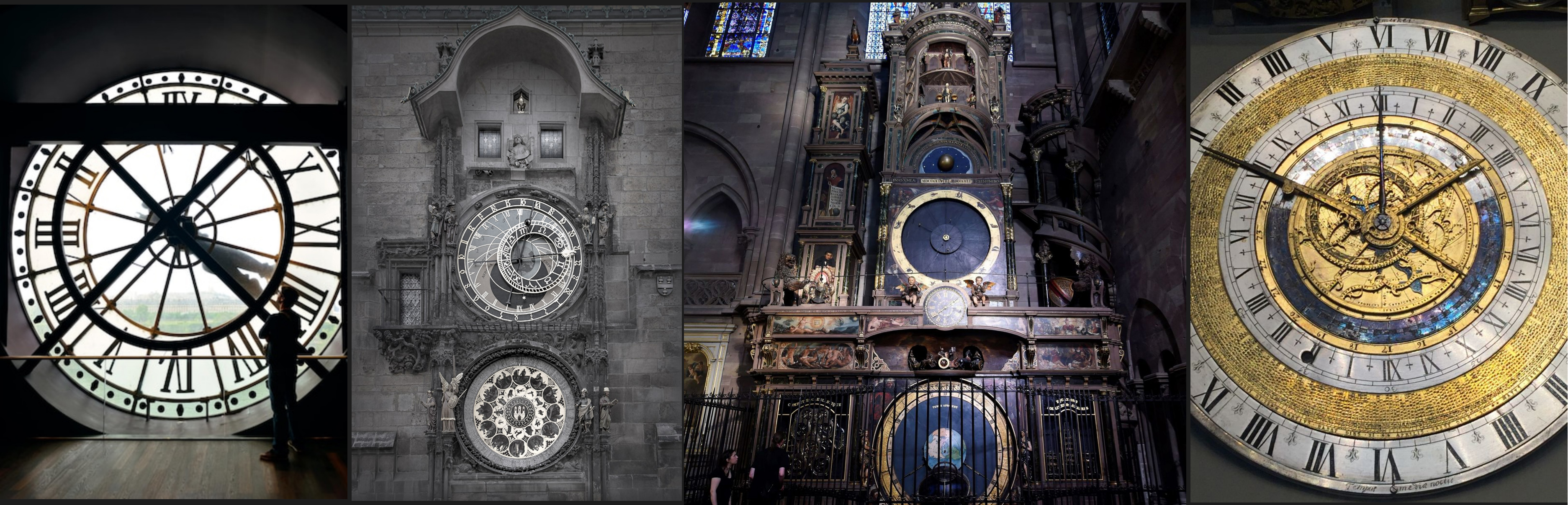
But for now, I'm tempted to start with this reference base, which I will develop later (or not!).
Thank you for passing by and … well, stay tuned:)
#leartesstudios
An unexpected detour: when the Orient meets Art Nouveau
Gradually, my initial research and the references previously set aside for the"Veiled Realms Challenge" continue their journey in my mind. Yet, something new has emerged, like an unexpected breeze: an attraction to the Orient, its organic labyrinths, its warm colors, and its materials that tell centuries of stories. I find myself dreaming of Moroccan souks, where winding alleyways come alive under copper lanterns, where spice stalls release enchanting aromas, and where antique shops overflow with objects worn by time, in brass or glazed ceramic. These images haunt me, as if they were the oriental counterpart to my mechanical and architectural obsessions.
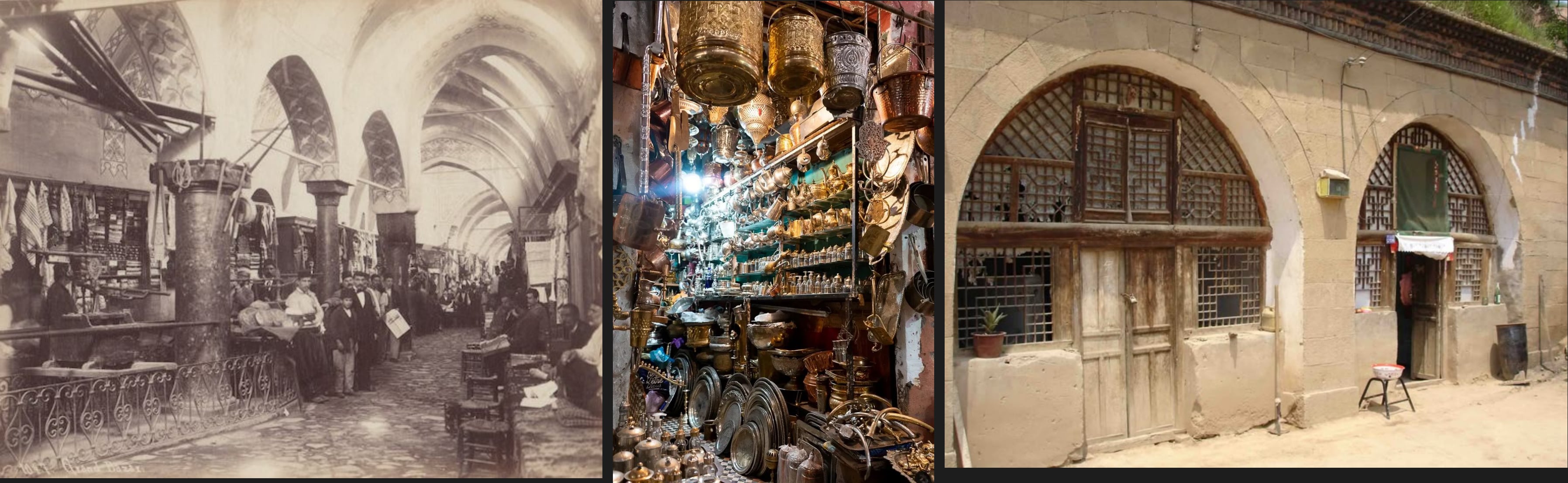
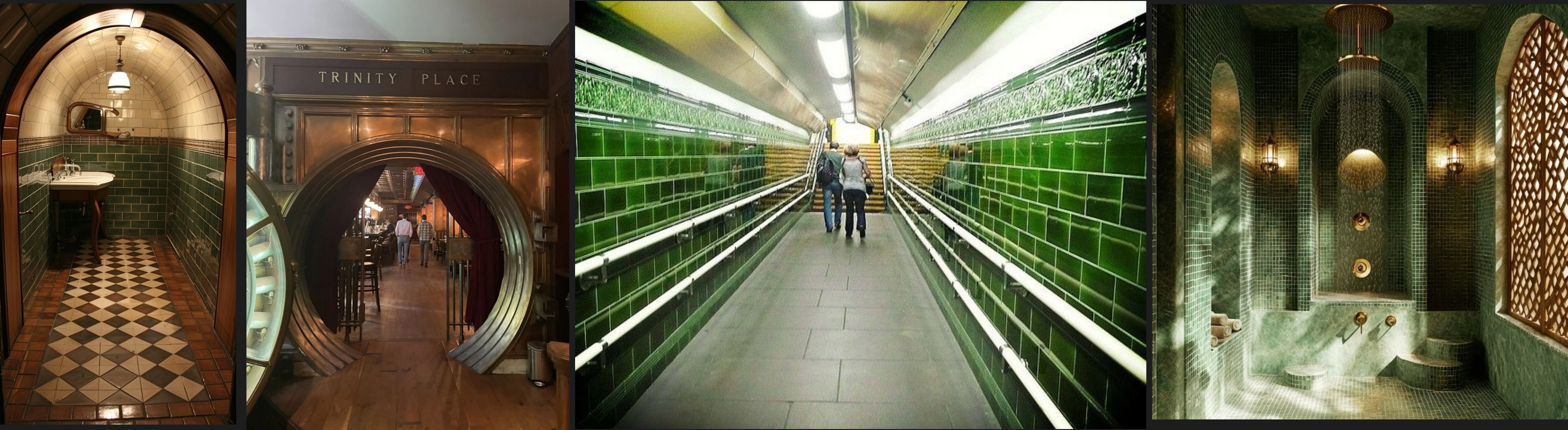
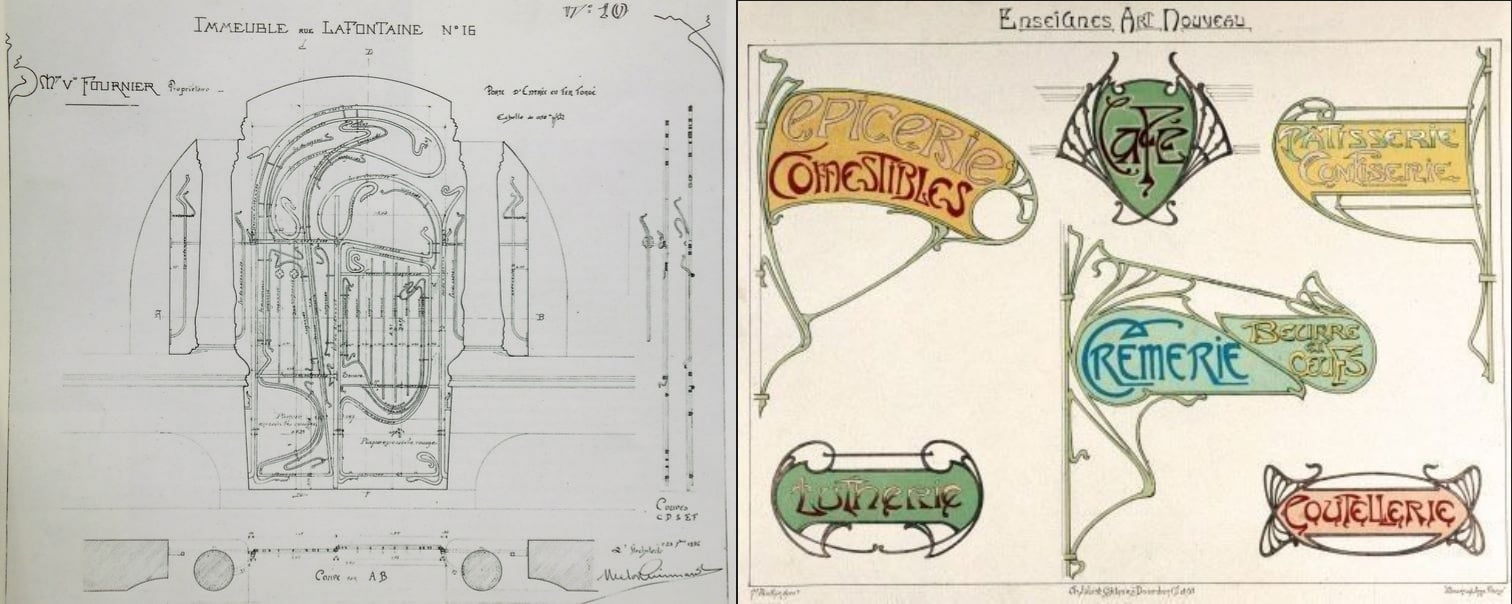
The more I delve into it, the more I realize that this fascination isn't so far removed from my initial inspirations. These Turkish shopping arcades, with their carved wooden facades and narrow corridors, strangely remind me of the underground tunnels of the Paris metro..those forgotten spaces where Hector Guimard's Art Nouveau unfolds its elegant curves, its ornate ironwork, and its tiles that seem to have sprung from a steampunk dream. In both worlds, there's a similar sense of immersion: places where time stretches out, where every architectural detail tells a story, where you get lost only to find yourself again.
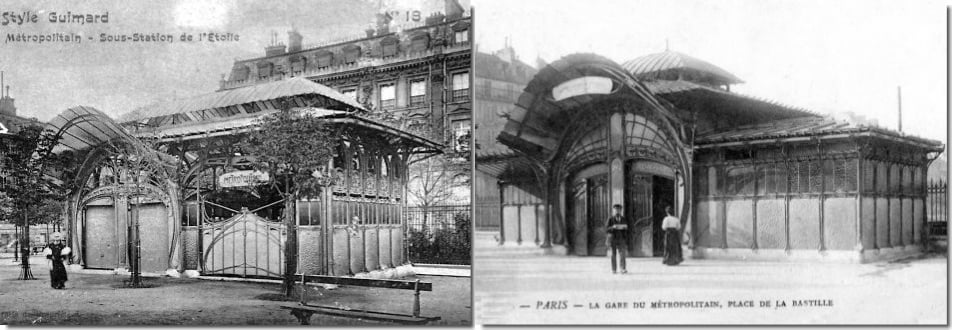
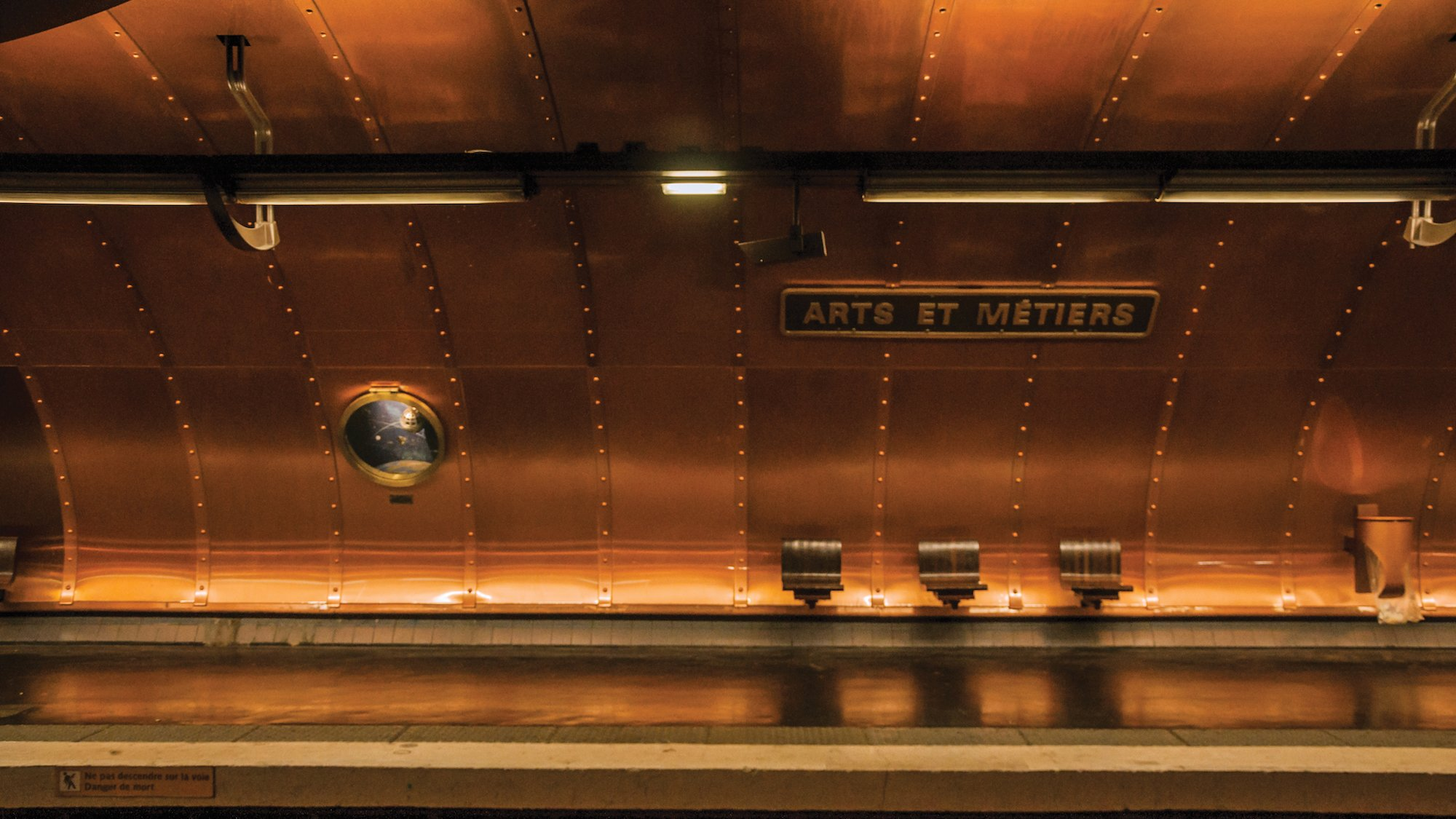
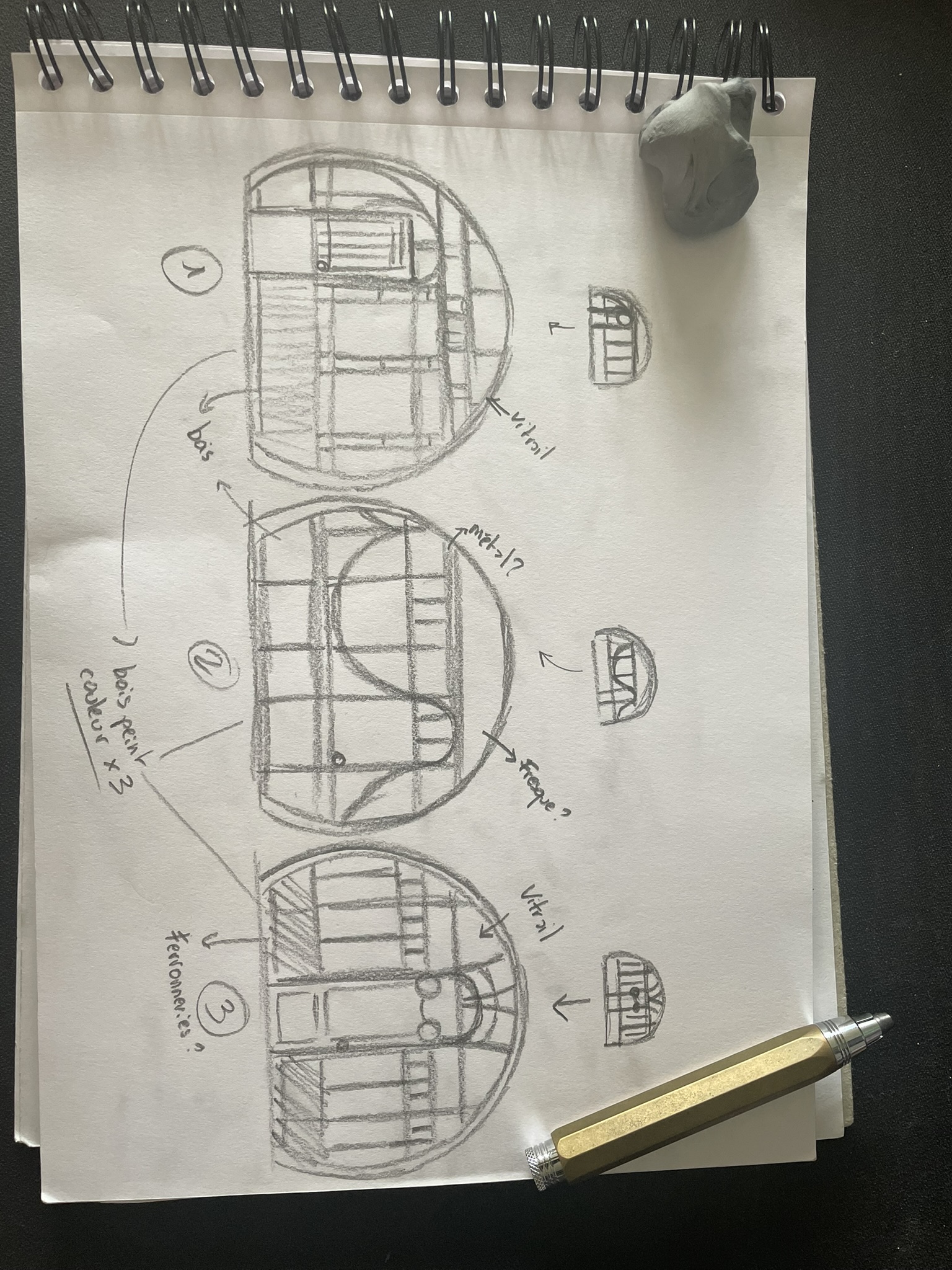
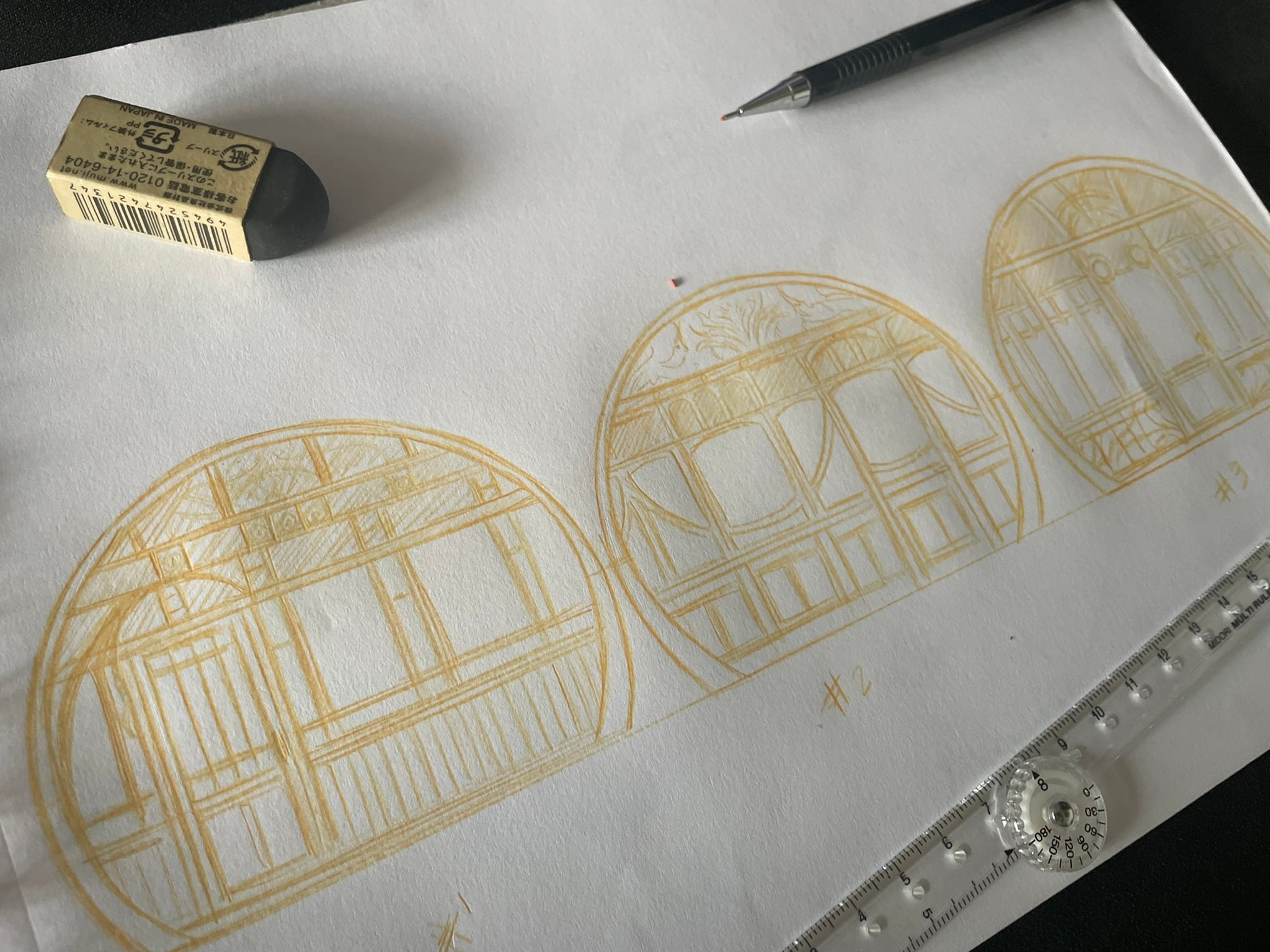
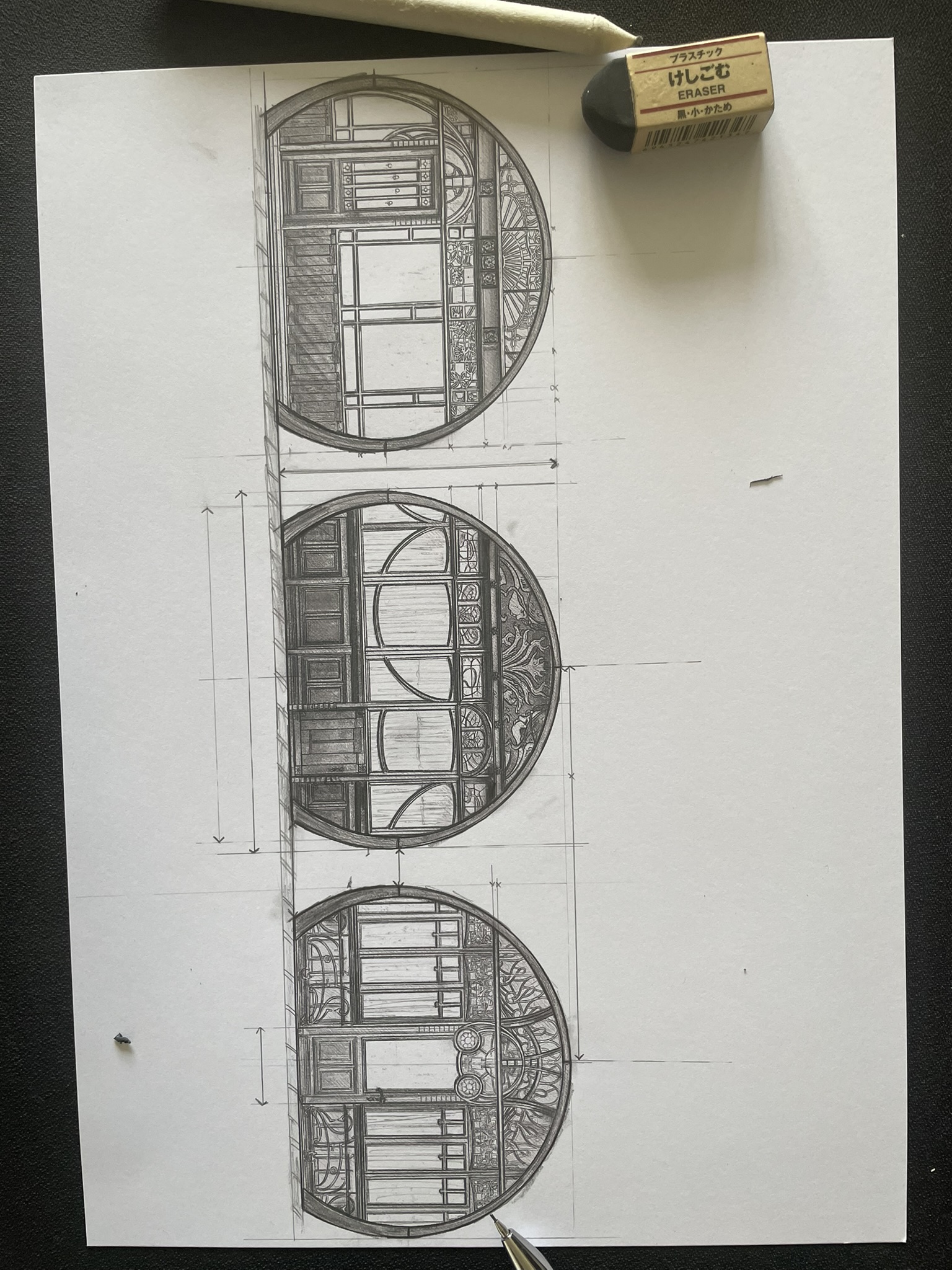
And then there's that smell of copper..which I want to be present in this centuries-old underground souk. It brings to mind another, more dreamlike reference: the Arts et Métiers station imagined by François Schuiten, this subterranean world where mechanics create such a unique atmosphere, both nostalgic and futuristic. But for now, I'm content with these few sketches of rounded storefronts, which I'll refine later. Perhaps this is the heart of my exploration for this challenge: to create a space where cultures and traditions meet and mingle, where ancient materials converse with imaginary mechanical structures, where the scents of spices mingle with the oil of the machines...
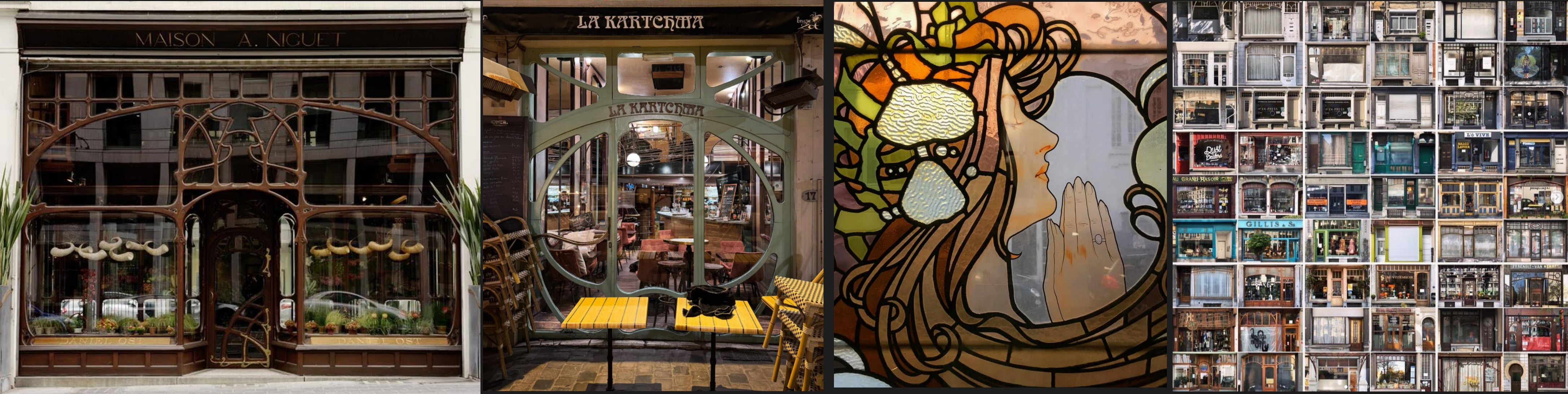
For now, I'm letting myself be carried away by these images. I'm collecting photos of intricately patterned mashrabiya screens, old Brussels shopfronts with oxidized ironwork, and covered markets where light filters through stained-glass windows. I'm also noting down wilder ideas: what if these corridors were crisscrossed by water channels, like in Turkish baths, or if discreet steam engines were integrated into the shops, hidden behind embroidered curtains?
One thing is certain: this project is becoming much more than just participation in a challenge. It's an exploration of these liminal spaces, where cultures intersect, where past and future coexist, and where every detail..a smell, a texture, a shadow...can become the starting point of a new story.
From sketches to technical drawings:
After the initial sketches, it was time to refine these storefronts and give them a more tangible form. I fleshed out the three shops in my shopping arcade with a more detailed pencil drawing, almost an architectural elevation, but not quite. That will come later; this type of rendering allows me not only to clarify my ideas but also to prepare technical drawings for potential 3D modeling. I've always been drawn to architectural plans—these documents that transform a vague idea into something concrete, something buildable. For me, it's an essential step: breaking down an illustration into technical elements is like laying the foundations of a world before inhabiting it.
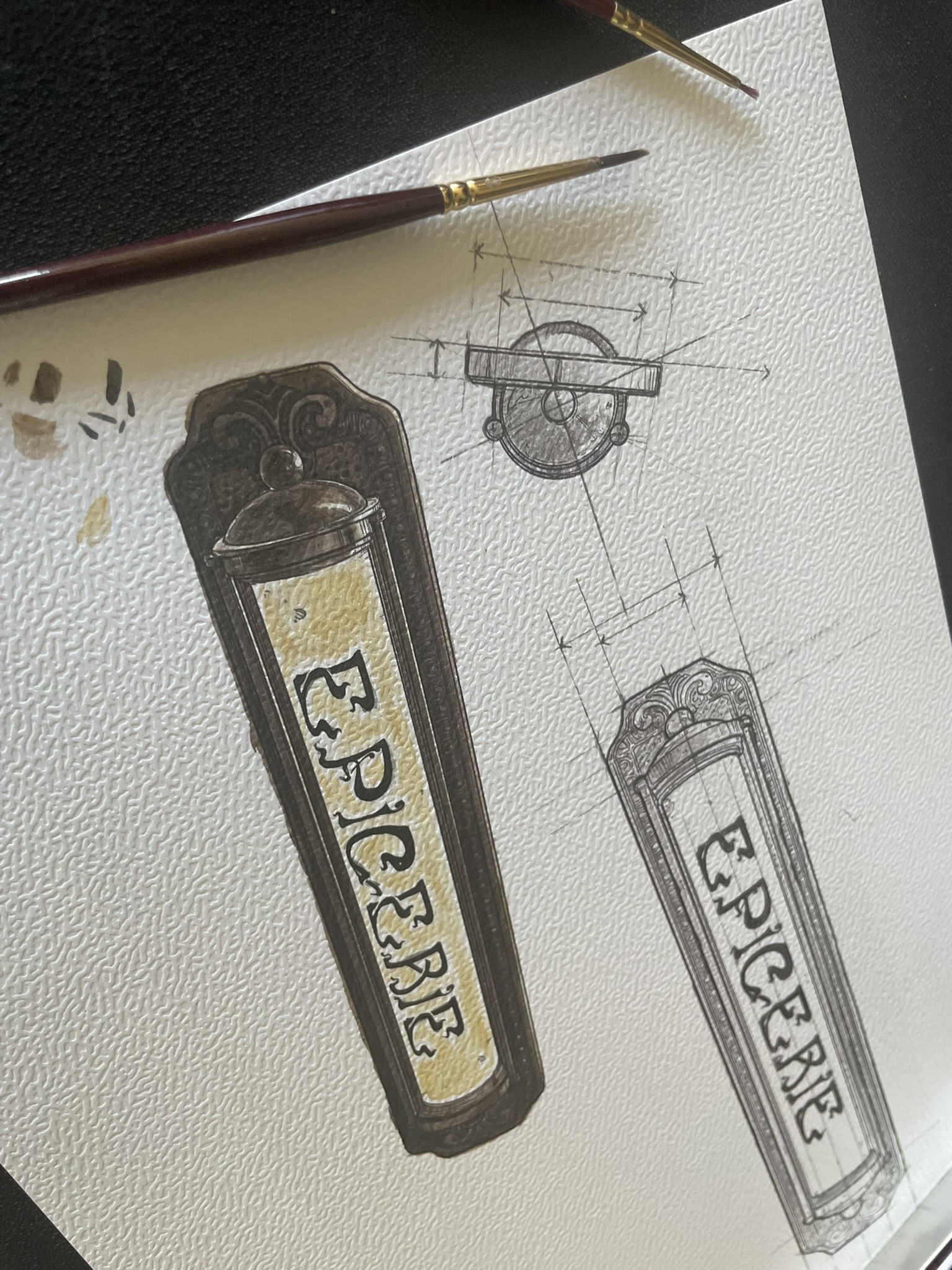
While exploring this shopping arcade idea, a new inspiration came to me: illuminated signs above each storefront. Imagine brass or copper tubes housing a neon light that diffuses a soft glow, with the shop's name written in floral lettering, in the style of Alphonse Mucha. I created a technical drawing to define the proportions and materials, as well as a watercolor rendering to visualize the overall concept. These signs would add a touch of both retro and fantastical charm, as if each shop were a gateway to another world.
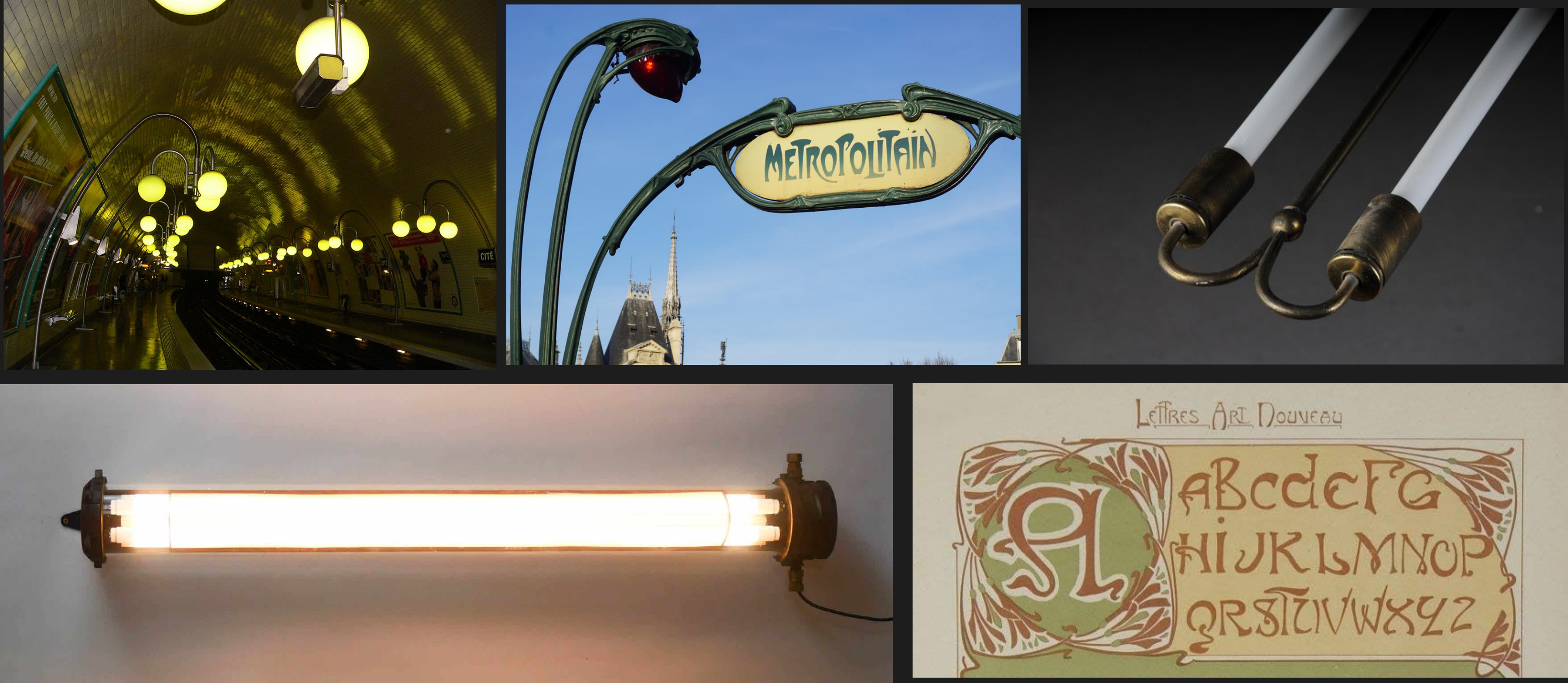
At this stage, I also start thinking about the overall lighting atmosphere. I want a mix of natural and artificial light:
-->Natural light would come from bay windows (?), filtering in a golden light (perhaps that of the golden hour) to soften the cool tones of the materials.
-->Artificial light would be provided by neon signs and light globes inspired by those in the “Cité” station of the Paris metro. These globes, suspended or fixed to the walls, would give off a warm, almost amber glow or a cold, almost spectral green at night.
-->To contrast with this warmth (or reinforce the spectral aspect at night), I imagine green ceramic tiles on the walls, reflecting a bluish-green light (a slightly gloomy atmosphere, somewhere between sinister and fantastical).
Next step: refine the shop plans, and start to define the overall structure of the place and its mechanisms...⚙️
Creative urgency: when the pencil beats the clock
Time flies, and with it, those long hours of iteration I would have liked to dedicate to every detail. Yet, it's almost a relief: I let my pencil guide me, without thinking too much, as if each stroke were an instantaneous decision. The ideas are there, clearer than ever. In my first post, I spoke of this desire to blend retro-futurism and industrial mechanics..a desire that is now taking a more precise form, inspired by places where time seems suspended: astronomical clocks.
I'm thinking in particular of the magnificent glass clock at the Musée d'Orsay, that elegant structure where transparency reveals the workings of time. But also of the monumental clocks of Prague and Strasbourg, with their mechanized automata that come to life to the sound of chimes. These machines, both poetic and technical, have become the heart of my shopping arcade. Imagine: a central astronomical clock, made of glass and brass, enthroned amidst the shops. Its hands would indicate not only the time, but also the lunar cycles, the tides, or even prayer times...a nod to the oriental souks where time dictates the rhythm of life.
But how to power such a system? I opted for a solution that was both aesthetically pleasing and functional: a hydraulic channel runs through the gallery, separating the shops into two distinct sections. In the center, a waterwheel drives a network of pipes and pulleys, distributing the energy needed for the clocks, the illuminated signs, and even the automata that animate the shop windows. Water, a vital and symbolic element, becomes the invisible engine of this world.
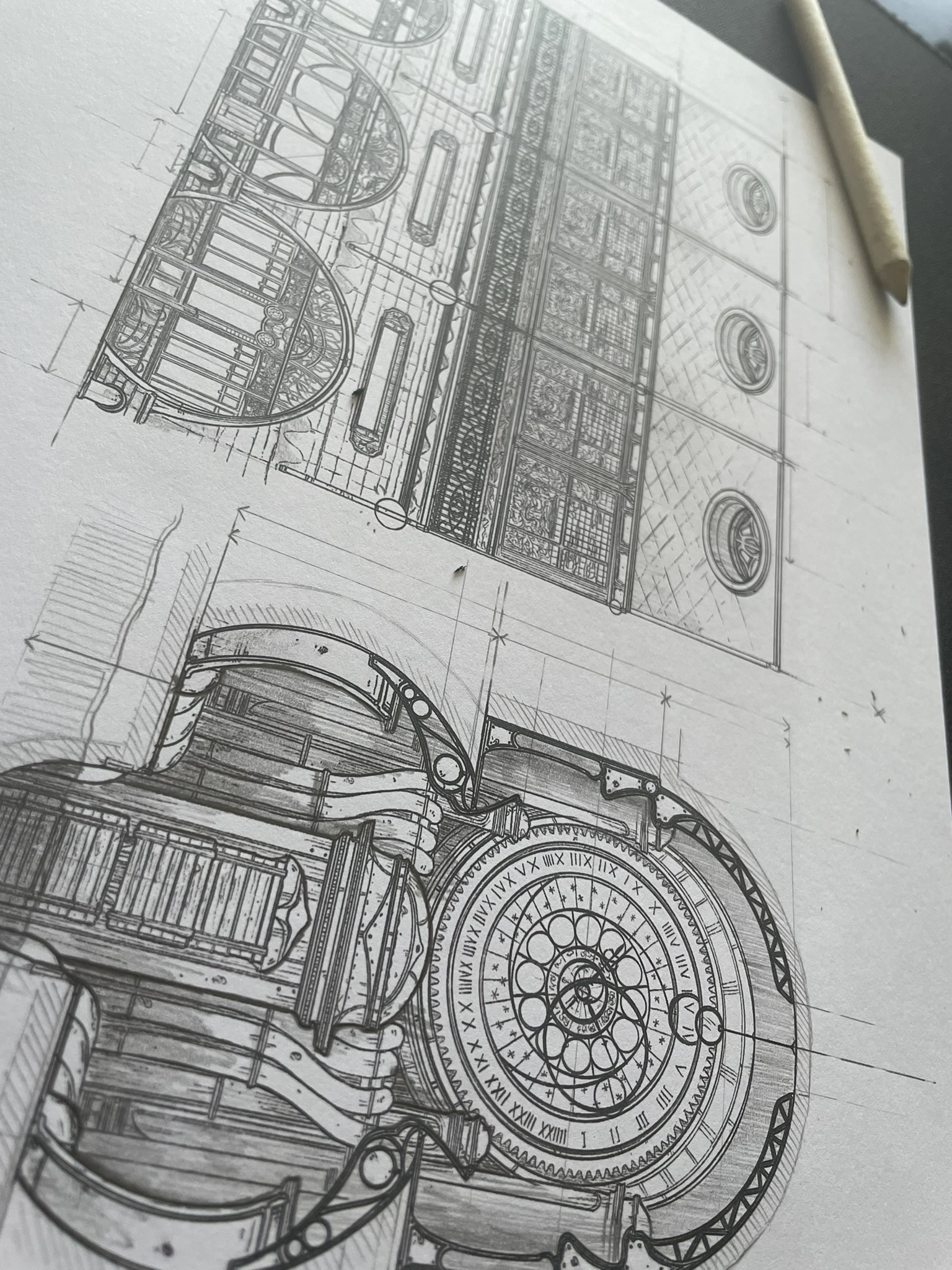
Upstairs, a wrought-iron walkway (with arabesques inspired by Victor Horta) overlooks the shops. From this vantage point, one could admire the ballet of automata, the reflection of neon lights on the ceramic tiles, and the perpetual motion of the waterwheel.
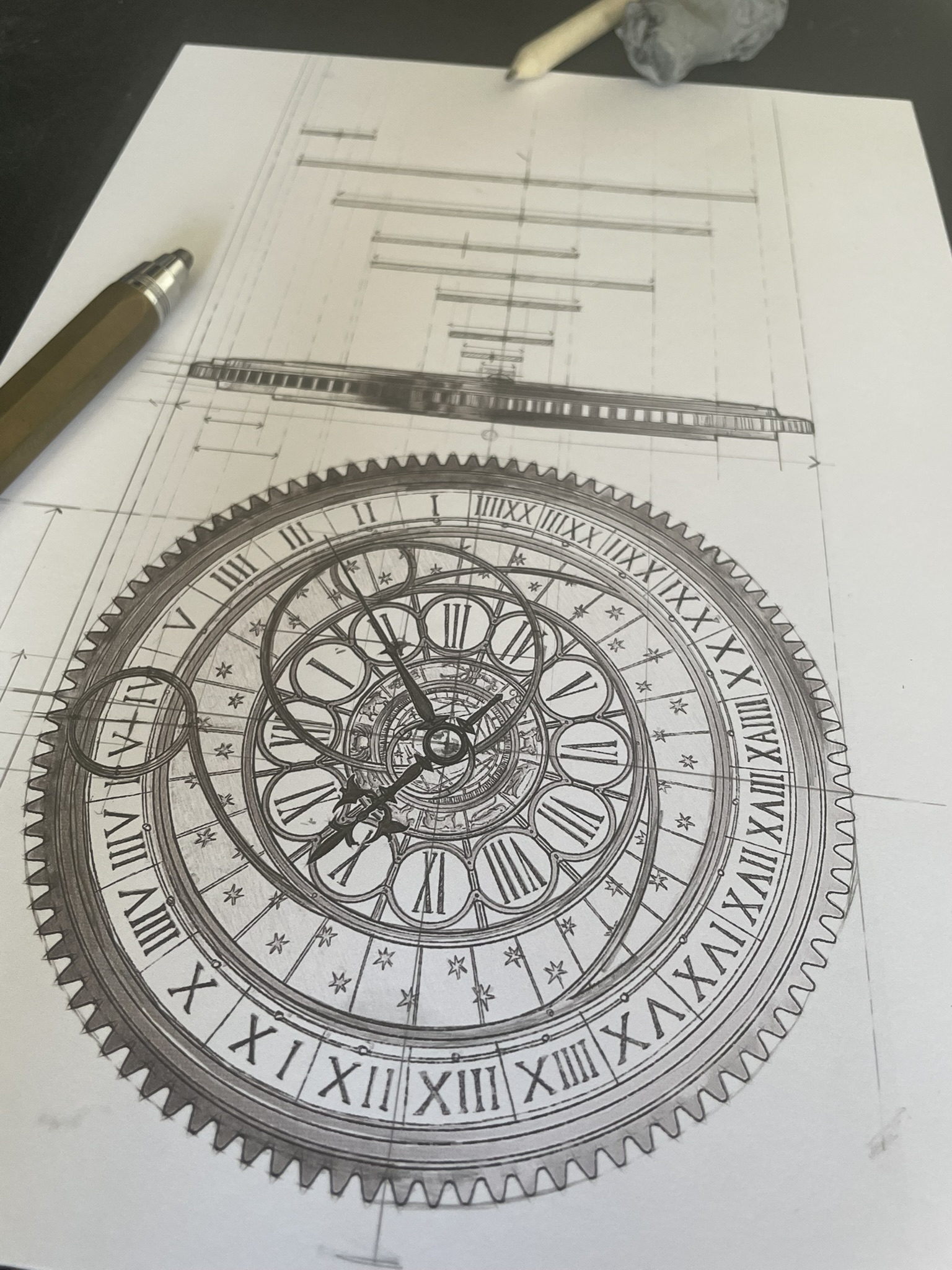
For now, I have finalized the technical plans for the glass clock (a mix of transparency and visible mechanisms), as well as the elevations of a section of wall and a more precise elevation of the shops (although the color test remains, in my opinion, too rough to be really useful, it still allows us to give a little precision on the materials and colors).
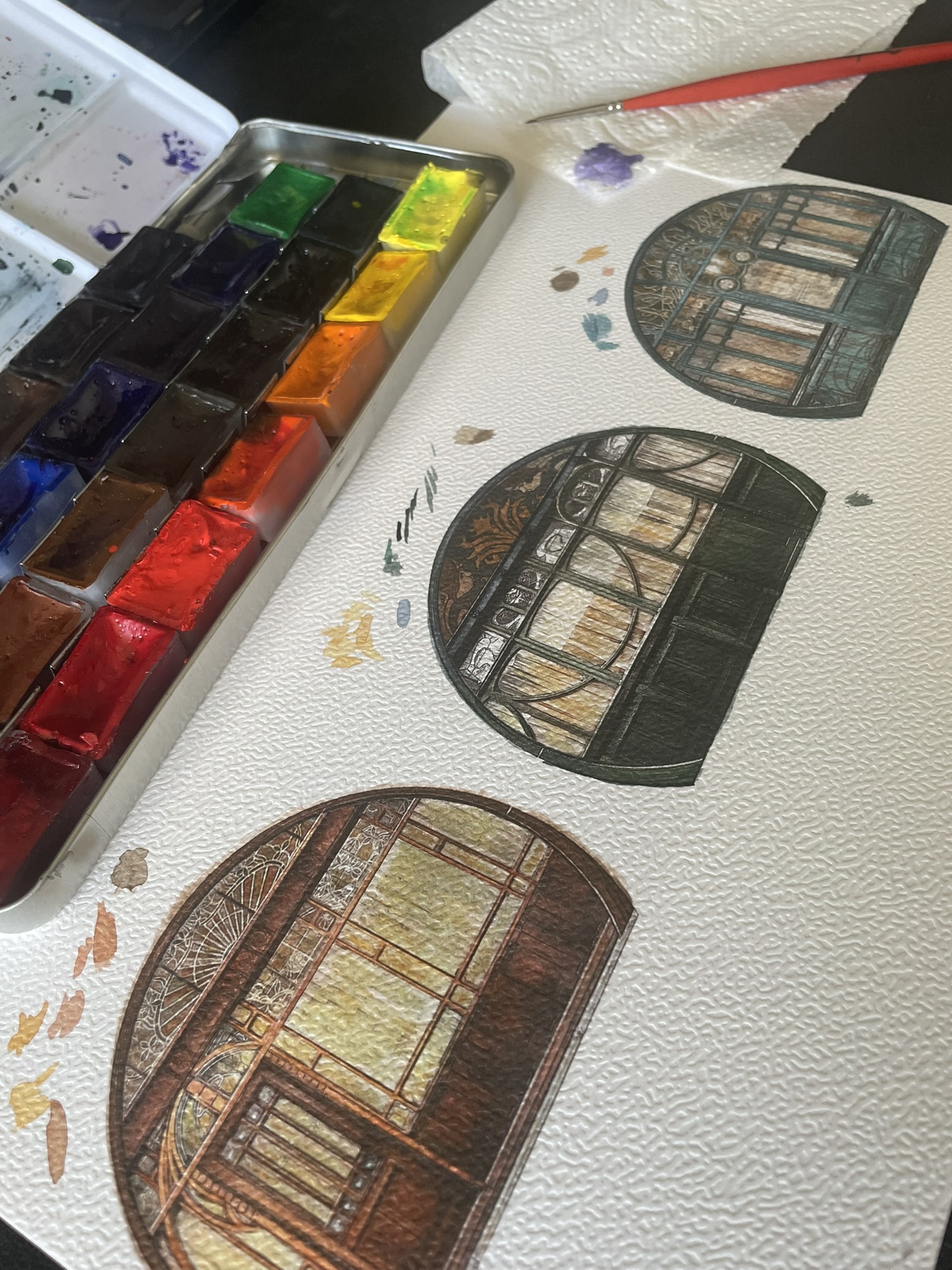
All that remains is to fine-tune: a final pass on Photoshop to lighten the shadows of the technical plans and add the final dimensions, then an artist's view in color, the one that will transform these lines and ideas into a tangible, almost palpable place. This project truly became a dance between urgency and patience, but it was a gentle journey where time stretched and contracted in a pleasant way.
Thank you to those who have stumbled upon this, whether for a moment or a reading. I hope these reveries have transported you as much as they have transported me.